
Celebrating the first World Prehabilitation Day
The Advanced Wellbeing Research Centre (AWRC) is excited to mark the first World Prehabilitation Day. The event aims to raise global awareness of a growing area of practice and research that is helping people to prepare for health events such as treatment and surgery, improving their recovery and long-term health outcomes.
What is prehabilitation?
The term prehabilitation refers to a support that helps people get as fit as possible before medical treatment, such as surgery or chemotherapy. The aim is to improve physical and mental wellbeing so people can cope better with the treatment.
Prehabilitation programmes typically focus on areas such as physical activity, nutrition, and emotional wellbeing. They also provide support that helps patients integrate and apply the lifestyle guidance. This is commonly referred to as ‘multimodal’ support.
The history of prehabilitation
While prehabilitation has gained prominence over the last 15 years, it’s far from a new concept. The term is thought to have originated from a 1946 study, published in the British Medical Journal titled ‘Prehabilitation, rehabilitation and revocation in the Army’.
The study found that an ‘astonishingly easy’ two-month programme of ‘good food, lodging, hygiene, and recreation combined with controlled physical training and education’ boosted the health and life satisfaction of 85% of participants.
Since then, prehabilitation has emerged as a growing area of clinical practice, especially within cancer care. Cancer treatments such as chemotherapy and radiotherapy can be incredibly demanding on the body, and a treatment journey can take a significant physical toll.
The start of medical treatment has previously been compared to running a marathon. While the comparison is not perfect, both place physical strain on the body. It also creates an interesting question: should someone run a marathon without any preparation? It wouldn’t be ideal to arrive at the starting line of a marathon without having followed a training plan, and you certainly wouldn’t expect great results.
The same principle can be applied to cancer treatment. Undertaking a holistic prehabilitation programme ahead of treatment or surgery may help reduce complications from the treatment and improve patient outcomes.
Prehabilitation research at the AWRC
At the AWRC, we have a strong and growing portfolio of prehabilitation research and service delivery. Our researchers are particularly interested in how physical activity can be used as a preventative and therapeutic tool within multimodal prehabilitation programmes. We recognise that combining exercise with complementary areas of support can result in outcomes that are more than the sum of their parts.
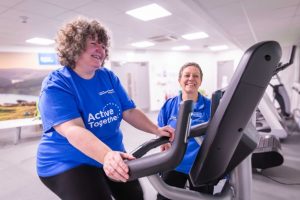
Active Together is our flagship prehabilitation programme. Funded by Yorkshire Cancer Research, the programme was developed by researchers at the AWRC and launched in 2022. Originally delivered by Sheffield Teaching Hospitals, the programme has since expanded to several more NHS Trusts across Yorkshire and has supported over 3000 patients with personalised, multimodal support following a cancer diagnosis.
The programme also continues to generate new evidence for the field. Researchers are currently using Active Together to investigate the impact of preoperative weight loss in people undergoing treatment for gastrointestinal cancer, exploring links between weight loss, surgical outcomes and quality of life. The findings will inform the future development of prehabilitation services.
The use of digital technology to support prehabilitation is another growing area of research. Our collaboration with the Royal Marsden Hospital is exploring the use of wearable sensor technology in the delivery and assessment of prehabilitation.
The research team are codesigning a chatbot to support people through their cancer journey, helping to screen, assess and develop interventions. The project is also leading the development of a core outcome dataset that will be used internationally to assess the impact of cancer prehabilitation.
While prehabilitation is typically used to support cancer treatment, researchers at the AWRC are also working to apply it to other clinical pathways.
Following disruptions relating to the Covid-19 pandemic, waiting lists for knee and hip replacements were significantly increased. Recognising that physical activity dropped in those awaiting surgery, leading to loss of muscle mass and a drop in physical fitness, researchers at the AWRC designed the Active Wait programme.
Informed by expertise gained through cancer prehabilitation, researchers with expertise in physiotherapy and MSK designed a set of online tools to support people waiting for surgery to manage their physical and mental wellbeing, increase activity levels and reduce the amount of time spent sitting, all of which can help manage pain symptoms and prevent further health deterioration.
Looking ahead
Recognition of the value of prehabilitation continues to grow, and its inclusion in the National Cancer Plan for England is a welcome step forward. The AWRC noted that the plan’s focus on digital prehabilitation had potential to increase efficiency and extend reach, but emphasised that services must be personalised and community-embedded if they are to reduce inequalities and ensure no-one is left behind.
Nonetheless, our ongoing research and partnerships such as that with the Royal Marsden Hospital are exploring what effective and equitable digital and hybrid prehabilitation could look like in practice, and when applied to a variety of conditions and care pathways.
The establishment of a World Prehabilitation Day is testament to the growing recognition of prehabilitation as a field of research and clinical approach. As the NHS places an increasing emphasis on prevention, prehabilitation demonstrates how earlier intervention in care pathways can improve health outcomes, increase quality of life, and reduce growing health inequalities.