
Using behavioural science to design interventions that promote physical activity
Active populations are associated with increased economic participation, lower health and care costs and stronger social cohesion. To help achieve positive outcomes, local authorities may choose to design interventions to help encourage people to be more active.
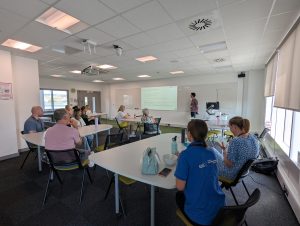
At this month’s AWRC lunch and Learn session, Dr Martin Lamb – senior research fellow in the physical activity, wellbeing and public health research group at Sheffield Hallam University, and a co-locator at the AWRC – discussed how taking into account people’s capabilities, opportunities and motivations when designing local interventions may help facilitate lasting behaviour change.
Martin drew on research undertaken during his time with the Centre for Behavioural Science and Psychology (CeBSAP) on behalf of Cambridgeshire County Council to identify interventions to increase physical activity across the region.
Recognising that a ‘lift and shift’ approach to intervention design is often inefficient due to place-based differences and disparities, the council was keen to identify the barriers and facilitators to physical activity specific to Cambridgeshire.
To do this, the research team used a behavioural science approach which allowed them to understand existing physical activity behaviours in the area to help inform intervention design and implementation.
They used the COM-B model as a framework to design a survey which was completed by 1037 residents approximately representative of the region in terms of geography and demographics. Participants were asked about their current physical activity levels, and – in line with COM-B – about their capabilities (physical and psychological), opportunities (social and physical) and motivations (automatic and reflective).
The responses to the survey allowed the researchers to assign scores for all COM-B factors. Knowing about a local parkrun, understanding how to register, or feeling capable of running or walking the course might contribute to a higher capability score, while living close to a parkrun, or having the time and means to travel to it, may contribute to a higher opportunity score.
Motivation scores reflect how much a person, both consciously and unconsciously, wants to engage in a particular behaviour. Someone whose only experience of running was struggling around a muddy field during high school PE in December may be less motivated to take part in parkrun as an adult.
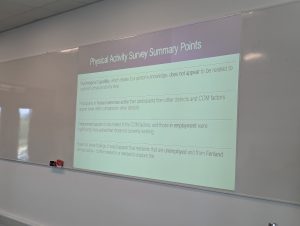
Analysis of the survey data identified significantly lower levels of physical activity in Fenland and among the unemployed group. People in these groups reported lower COM-B factor scores across the board except for psychological capability.
Understanding the unique barriers faced by the least active groups was an important next step. To achieve this, the research team conducted in-depth interviews with ten residents including seven who were unemployed, four from Fenland, and four with long-term health conditions.
Participants reported a lack of knowledge about how to engage in physical activity, including how to get started and how to use equipment, reflecting capability-related barriers. Opportunity-related barriers included a lack of appropriate facilities or classes local to participants.
Sometimes, simple barriers proved prohibitive, with one participant explaining that although there was a swimming pool local to them, children’s swimming lessons were scheduled during their only free time.
The importance of motivation was evident during the interviews. Some participants reported that the intention to be active alone was not sufficient, but that being surrounded by others supportive of their intentions to be active had a positive impact, alongside having belief in their own ability and building positive experiences of physical activity.
To further inform the process, the research team undertook a rapid review of 24 published interventions in underserved areas, assessing which behaviour change strategies had been utilised and to what effect.
The final recommendations were shaped by all three phases of the study and designed to address local needs using the COM-B framework. They included providing better resources about how and where to be active, designing interventions which used coping planning and ‘what-if’ strategies to help people transform intentions into action, and working with local physical activity providers to embed behavioural science principles into their messaging.
The project demonstrated how behavioural science can help local authorities move beyond one-size-fits-all approaches, providing a deeper understanding of the barriers and facilitators that influence physical activity in different communities.
As the NHS continues its shifts from hospital to community and from sickness to prevention, understanding how to design targeted approaches that are suited to local needs and more likely to support lasting behaviour change is vital.
Thank you to Martin for such an engaging lunch and learn session!