
Creating safe spaces for people with severe mental illness to be physically active
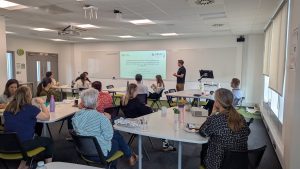
At this week’s Lunch and Learn session, Dr Gareth Jones of the School of Sport and Physical Activity shared insights from two NIHR-funded projects focused on enabling people with severe mental illness (SMI) to lead more physically active lives.
SMI, which includes conditions such as schizophrenia and bipolar disorder, and can make everyday life more of a challenge. People with SMI face additional barriers to physical activity, despite research suggesting significant physical and psychological benefits.
The project ‘Supporting Physical Activity through Co-production in People with Severe Mental Ill Health (SPACES)’ began in 2021 with the aim of co-producing a physical activity intervention to be delivered in the NHS for people with SMI.
This work highlighted the importance of co-producing interventions that are not only effective within NHS settings but also sustainable in community contexts. This led to the development of the Co-SPACES project, which emphasised the importance of community provision and bridging the gap between NHS mental health teams and community physical activity providers.
Using interviews, surveys, and co-production workshops involving people with lived experience, NHS professionals, and community providers, the Co-SPACES team explored two key questions:
- How can PA coordinators (PACs) better identify and engage with community providers (CPs)?
- How can CPs be supported to offer inclusive PA opportunities for people with SMI?
This led to the identification of potential solutions, which were mapped using an impact/effort matrix, and low-effort, high-impact solutions prioritised. These included:
- Protected time for CPs
- Case studies showcasing impact
- Training and guidance on SMI
- Collaborative working and local networking
A recurring theme was the misunderstanding of SMI, which is often confused with other conditions or oversimplified in general mental health training. To address this, the team developed practical resources including a checklist for creating safe activity spaces and a case study illustrating the lived experience of an individual with schizophrenia accessing physical activity in the community.
The workshops demonstrated that co-production can yield a sum greater than the individual parts. But this is just the beginning – the tip of the iceberg. National guidance, CP training, and stronger NHS-community links are essential areas to address in the future. Find out more about the SPACES and Co-SPACES projects.