
What Happens When We Design an Online Module from Students Perspective?

Introduction
Designing an asynchronous online module from the perspective of MBA students can create more engaging, flexible, and meaningful learning experiences that improve student outcomes.
Online learning has become an integral part of higher education, yet many online modules are still designed primarily from an academic perspective. While academics rightly focus on learning outcomes, curriculum design, and assessment, it is easy to overlook an important question:
What is it actually like to be one of our students?
Seeing the Module Through Students Eyes
Our students are professionals with busy and often unpredictable lives. Many balance full-time employment alongside family responsibilities and study across different time zones using a variety of devices and internet connections.
By imagining ourselves as online MBA students, we began to think differently about every aspect of the module:
- When will students realistically engage with learning materials?
- How much content is manageable each week?
- What support will they need if studying alone?
- How can learning activities fit naturally into their professional lives?
This simple change in mindset challenged many of our assumptions and encouraged us to design with empathy rather than convenience.
Designing for Real Life
Viewing the module through students’ perspective influenced both the structure and learning activities as well as the support throughout the module.
To create an engaging online learning experience, we drew on the Community of Inquiry Framework (Garrison, Anderson & Archer, 2000), which emphasises three interconnected elements of effective online learning: teaching presence, social presence, and cognitive presence. This provided a practical framework for designing a learning community where students could engage with ideas, learn from one another and apply new knowledge in meaningful ways.
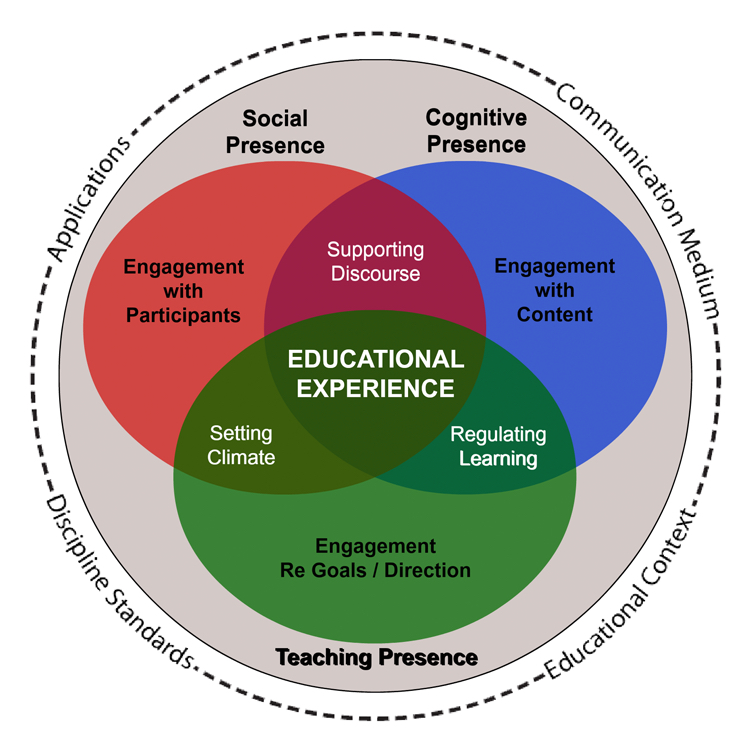
Figure 1: The Community of Inquiry framework.
Image used with permission from the Community of Inquiry website and licensed under the CC-BY-SA International 4.0 license (https://creativecommons.org/licenses/by-sa/4.0/). The original image is located at https://www.thecommunityofinquiry.org/coi
We developed flexible, bite-sized learning content that students could access at a time and place that suited them. Timely tutor feedback and peer support became central features of the module, allowing students to build confidence before completing the summative assessment.
Rather than relying on purely theoretical activities, we encouraged students to apply concepts directly to their own organisation or to business idea they wished to develop. This made learning immediately relevant and professionally meaningful.
What Difference Did It Make?
The impact was evident in both student performance and engagement.
Students produced higher-quality summative assessments that demonstrated stronger critical thinking and authentic application of theory to real-world challenges. A student commented that formative feedback had helped them refine their ideas, improve their work, and develop greater confidence throughout the module.
Perhaps most importantly, students recognised the practical value of their learning. Several were able to apply new knowledge within their current organisations, while others used their assessment to develop future business venture.
A Small Change with a Big Impact
Designing online learning through the eyes of our students reminded us that successful online education is not simply about transferring classroom teaching into a digital environment. It is about understanding the student context, recognising the realities of their lives, and creating experiences that are flexible, engaging and genuinely useful.
Reference
Garrison, D. R., Anderson, T., & Archer, W. (2000). Critical inquiry in a text-based environment: Computer conferencing in higher education. The Internet and Higher Education, 2(2-3), 87–105. https://doi.org/10.1016/S1096-7516(00)00016-6
Authors
Asif Majid, Associate Head, Sheffield Business School
Dean Maragh, Senior Lecturer, Sheffield Business School