
“I’ve published a SoTL output, and I want everyone to know!”: Elements Part Two

Introduction
In our previous blog post ‘Using Elements for SoTL‘ we shared how you can record your SoTL outputs on Elements. This is a platform that enables you to record and manage your outputs including conference presentations, blogposts, case studies and podcasts, all in one place. For SoTL, this means including all outputs across the whole SoTL Staircase (Beckingham 2025). We also introduced you to the search function so that you can search for learning and teaching outputs from SHU colleagues.
This is a great resource for scoping interdisciplinary SoTL projects (SoTL Stage 3). This blog post acts as a reminder for these functions but also helps to develop a narrative around the advantages of maintaining your Elements page and staff profile.
Example Elements Records
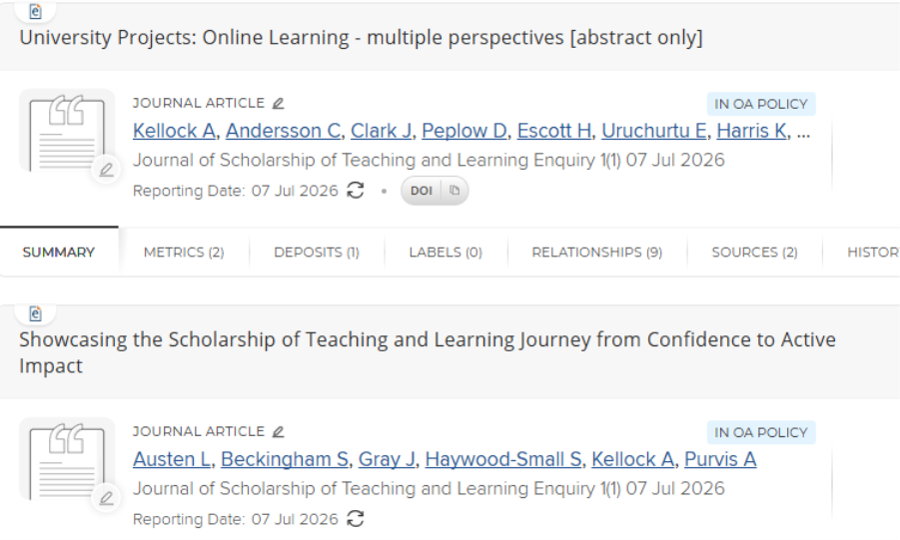
The SHU Elements guidance suggests you can “use Elements to deposit many different types of scholarly and creative works, including journal papers, conference papers, book chapters, books, conference or workshop items, shows and exhibitions”. SoTL outputs are wide ranging, and Elements can gather them all. Here are a few of our SoTL examples:
Figure 1. Elements record of a SoTL podcast
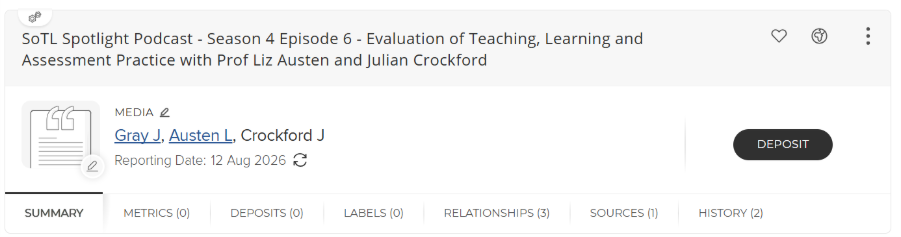
Figure 2. Elements record of an online blogpost
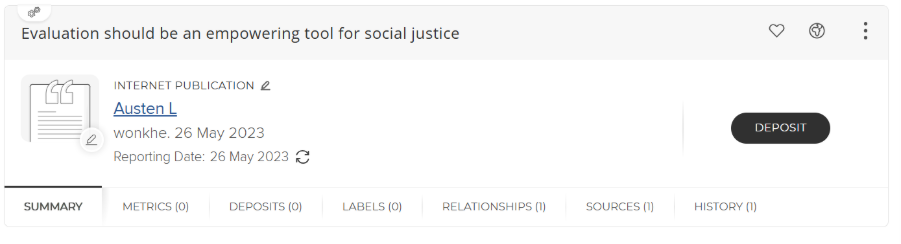
Figure 3. Elements record of a journal article
What are the benefits of updating Elements?
Elements is used to update and modify your SHU staff profile. These profiles appear on the external web pages and are searchable for external stakeholders. Your profile includes links to your publications, but also your teaching specialisms and supervision experiences. This guide provides details of how to modify your staff profile for maximum reach.
Recording your SoTL outputs provides evidence against your annual PDR objectives. This record can be used as evidence of scholarship in teaching and learning when applying for AdvanceHE Professional Recognition (fellowship at any level) or National Teaching Fellowship. It can be shared with colleagues who may be engaging in PRE with you, or as prior evidence of enquiry in a new SoTL project proposal. When you apply for Associate Professor or Professor in Teaching and Learning, an Elements record is attached to your submission. Kellock and Austen’s Blogpost on the ‘Pentagon of Practice‘ shows how all these practice ‘elements’ are connected and then recorded in Elements!
Importantly, your Elements record demonstrates your impact to the university and the sector. It can be useful for making connections with other institutions, getting invitations to deliver keynotes at institutional Teaching and learning Conferences, and attaching to funding bids. A weblink to your staff profile, containing the Elements link, can be added to your LinkedIn bio.
What next?
Did you present at the Teaching and Learning Conference in July? Have you added your conference presentation to Elements? Have you added your abstract from the JoSTLE book of abstracts? Are you going to write up your presentation as a case study, or plan to publish in JoSTLE and add this to your Elements list? It takes 5 mins per record – you could do it now (bit of advice – don’t wait until you really need it to update it!).
We can help – Team SoTL
Authors
Anne Kellock, Associate Head, Sheffield Institute of Education a.kellock@shu.ac.uk
LinkedIn: https://www.linkedin.com/in/kellock-anne-9b009170/
Liz Austen, Professor and Associate Dean, LTSS l.austen@shu.ac.uk
LinkedIn: https://www.linkedin.com/in/prof-liz-austen-booth-59a8b815a/