
Failure in Motion: perfection paralysis and productive failure in autistic learners

The challenge of teaching uncertainty
As Module Leader across Level 4 Illustration, I have the privilege of supporting students through their transition from college into Higher Education studio practice. One thing I notice every year is how difficult many students find creative risk-taking. Many arrive from educational environments where success has often meant producing the correct answer or a polished outcome. University design studio practice asks something different though: experimentation, ambiguity, and a willingness to occasionally just get things a bit wrong.
For some students this transition is exciting. For others, particularly some autistic and neurodivergent learners, uncertainty can be painful and a genuine barrier to learning, progress and attainment.
Making failure part of the task
Over the last year I have been exploring whether failure itself can be scaffolded through a drawing exercise I call Peripatetic Drawing Practice (PDP).
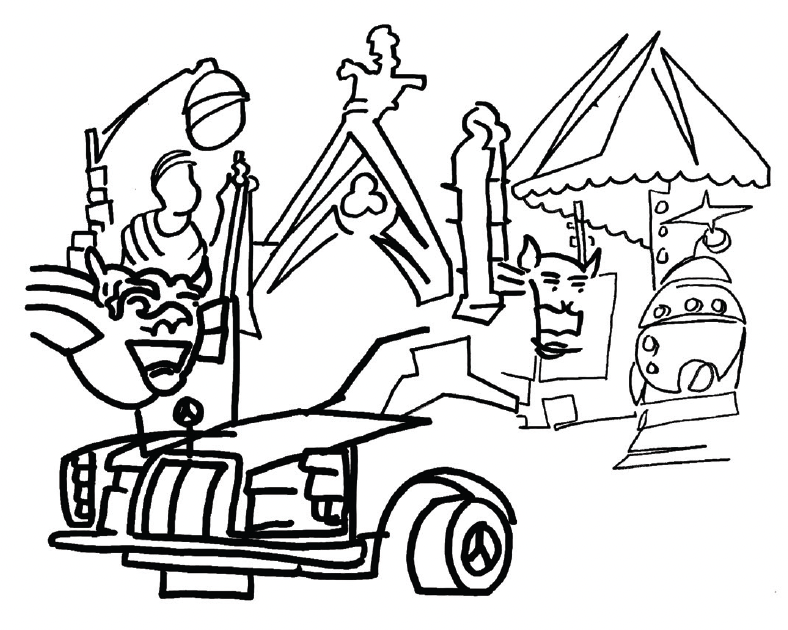
During an observational drawing workshop, students draw continuously while walking. They cannot stop to steady their sketchbook or wait for something interesting to draw. Architecture, landscape and passing moments are recorded from constantly shifting viewpoints. Precision quickly becomes impossible.
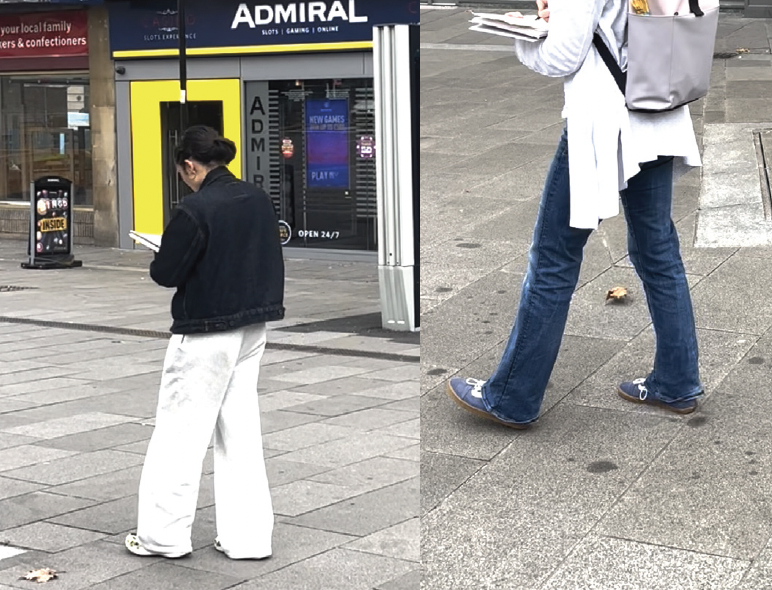
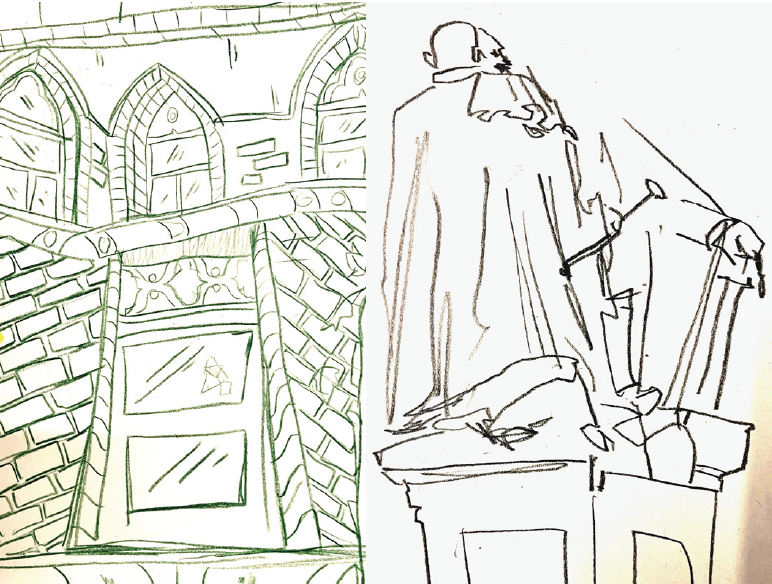
Rather than asking students to embrace abstract ideas such as ambiguity or productive failure, PDP builds uncertainty directly into the structure of the task. Distortion, interruption and incompletion become inevitable rather than personal shortcomings. The conversation shifts from “I can’t draw this properly” to “Nobody could draw this accurately under these conditions!”
From drawing exercise to research project
The project emerged from public engagement drawing workshops and artist residencies exploring walking as a drawing methodology and has since developed into a burgeoning SoTL project examining creative risk, inclusive pedagogy and progression and retainment for autistic students.
Structuring uncertainty
Rather than assuming ambiguity is equally accessible to all learners, I am interested in how educators might structure uncertainty in ways that support a wider range of students. PDP combines clear procedural rules with an environment of continual perceptual change. The constraints reduce decision-making while creating an endlessly shifting field of visual experience.
By making representational failure unavoidable, the exercise externalises the gap between intention and execution. Distortion becomes the consequence of movement rather than evidence of inadequacy. In that space, students often become more willing to experiment, persist and explore.
The project also expands conventional ideas about observational drawing. Walking is not simply the context in which drawing happens but an active part of the process itself. Drawing becomes bodily, temporal and responsive to place. Architecture and landscape are experienced as lived and mobile rather than fixed visual forms.
Early conversations
So far, I have delivered PDP workshops with Level 4 Illustration students and, more recently, with colleagues during the Intersections 2026: Liberating Structures staff development event. One of the most interesting outcomes has been the conversations the exercise generates: not only about drawing, but about how different disciplines introduce experimentation, support risk-taking and help students navigate uncertainty.
The project is continuing through conference abstracts, journal submissions and further workshops with Foundation Art and Design students.
In the meantime, a question I continue returning to is this: How is ambiguity scaffolded in your discipline?
Author
Oliver East, Senior Lecturer, SCII Sheffield Creative Industries Institute