
Using Interactive Map Activities to Build Rapport with Students

At the start of each new module, I like to include getting to know you style activities to build rapport with my students. However, I’m not a fan of the traditional ‘go around the room and tell us something about yourself’; not only because it’s overdone, but also because nobody enjoys it and it causes students stress, particularly if English is not their first language. The pressure of thinking of something ‘good’ to say also means that students would typically panic about what they’re going to say instead of listening to their peers. To overcome this, I started to explore fun, interactive, and most importantly, low stakes activities that I could use to help me get to know my students without causing stress.
The Approach
One tool I’ve found to work well, especially with international students, is the interactive map activity that you can easily create on Padlet using the AI Class Activity Creator function (see Figure 1).
Figure 1 – Map Your Hometown Activity
The activity involves students adding a pin to a map and sharing some information based on a prompt you provide. This could be their hometown, their favourite place, or the origin of a brand they like, for example. In addition to adding a location pin, they can also provide some text and an image – this is where you’re able to learn a lot more about them.
To start things off I always add my own pin, not only to share a bit about myself with them, but also to show them how it all works. Then I give them some time, usually around 5-10 minutes, to input their answers. Once everyone has submitted something I then click on each pin and ask the person who made it if they’d be willing to share what they’ve added (see Figure 2). The majority are usually happy to share, though if not, that’s fine too; again, this is meant to be pressure free.
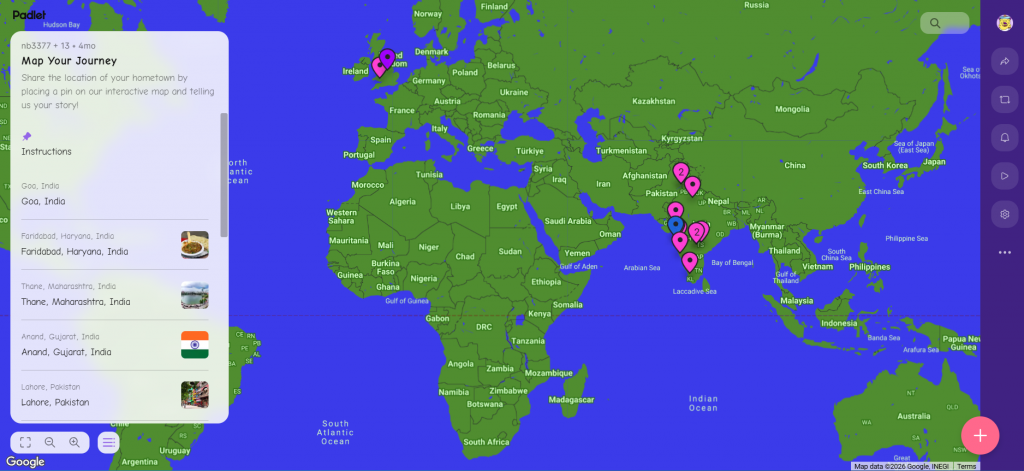
Figure 2 – Map Your Journey Activity
Impact and Outcomes
I have found that this activity is a great way of encouraging students to engage without adding unnecessary pressure. The low stakes nature of engagement, which only requires adding some information (which can be as detailed as they wish) to a map, means that students are typically happy to get involved. A key factor in this is that unlike an activity where students are put on the spot, they have a bit of time to think about their response, and because I’m asking for something specific students find it easier to come up with an answer; saying where you’re from is easy, coming up with something you think everyone will agree is ‘interesting’, is not. Equally, when I do go around the room to explore answers a bit further, students have something to read/refer to, which not only reduces the pressure, but often serves as a helpful starting point to talk a bit more about what they’ve added.
Tips and Tricks
- Tailor the focus or prompts to your subject area: as I teach food-based subjects, I often include a prompt like ‘tell us about a local dish’ or ‘what’s your favourite food from your country’ (see Figure 3).
- Start a conversation: if students are comfortable talking about their pin, ask them follow up questions. This not only helps you to learn more about them but shows them that you’re interested in what they have to say.
- Get involved: when you’re starting the activity off, share a bit about yourself: once you show a bit of personality and ‘let them in’, students are often a lot more comfortable talking to you, both in informal activities and during formal teaching.
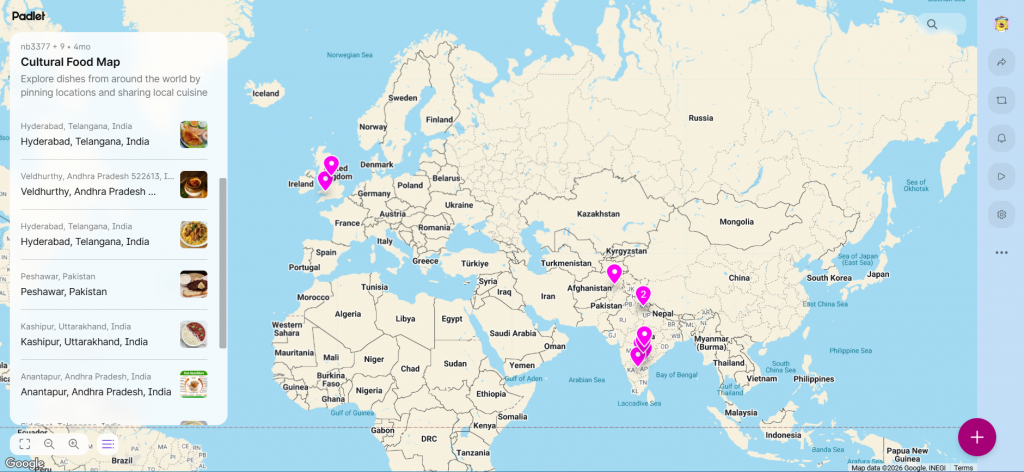
Figure 3 – Cultural Food Map Activity
Author
Nikita-Marie Bridgeman, Senior Lecturer, Sheffield Business School, Sustainable Futures and Supply Chain Division