
AWRC Voices: Croquettes, collaboration and systems thinking – reflections from ISBNPA 2026 in Cádiz
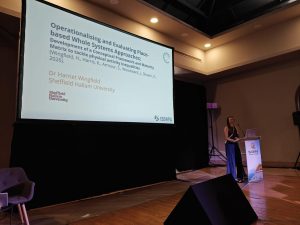
Harriet Wingfield is a Research Fellow in the School of Health and Social Care. She specialises in whole systems approaches and innovative models of health and social care, with a strong emphasis on addressing physical activity inequalities. For this edition of AWRC Voices, Harriet reflects on her time at the International Society of Behavioral Nutrition and Physical Activity (ISBNPA) annual conference, held in Cádiz, Spain.
First impressions of Cádiz
There are usually a few tell-tale signs that you’re travelling to an academic conference. This year, on the flight to Cádiz for the International Society of Behavioral Nutrition and Physical Activity (ISBNPA) annual conference, the giveaway was a cluster of researchers from multiple universities gathered at the back of the plane, frantically making last-minute tweaks to PowerPoint slides.
For once, I felt unusually smug. Travelling alongside my Sheffield Hallam colleagues James Woodward and Gareth Jones, and Leeds Beckett University colleague James Nobles, our presentations were already prepared. Between them, they provided excellent conference company, plenty of systems thinking discussion and, in James Woodward’s case, a surprisingly impressive ability to switch seamlessly into Spanish whenever required.
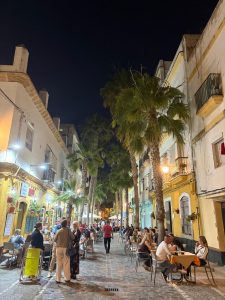
What we hadn’t prepared for was a delayed journey that helped us settle into Spanish life a little earlier than planned. Arriving late into the evening, we found ourselves eating dinner at 11pm on a beautiful, narrow cobbled street, over-ordering tapas and discovering what would become the conference’s unofficial theme: croquettes.
The conference itself began at full speed. James and I started day one with an 8:30am workshop focused on policy monitoring and evaluation using the Physical Activity Environment Policy Index (PA-EPI), led by Professor Catherine Woods’s team. It was encouraging to see growing international interest in strengthening how physical activity policies are assessed and monitored, alongside discussions about how the tool can continue to evolve.
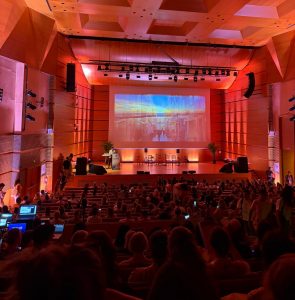
The official opening ceremony set the tone for the week. Hosted in a packed auditorium, local flamenco dancers and musicians welcomed delegates in unmistakably Spanish style. The energy in the room was infectious. The days quickly settled into a rhythm of conference sessions, networking and conversations over coffee, meals and evening tapas. By the end of the first day, we had spent more than 13 hours in the conference centre, reconnecting with colleagues and making new connections from across the world.
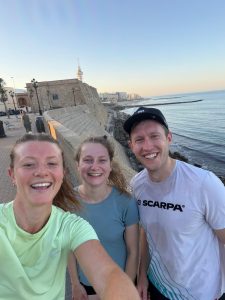
One of my favourite parts of the week was the informal time spent with colleagues outside the conference programme. Early morning runs became a regular feature, offering a chance to chat while watching the sun rise over Cádiz’s stunning coastline. In true physical activity conference fashion, every run involved bumping into familiar faces from across the international community.
The evolving systems conversation
A major highlight of the conference was the growing visibility of systems thinking research. Two years ago at ISBNPA in Omaha, systems approaches still felt like an emerging conversation. In Cádiz, that conversation had clearly matured. Systems sessions were packed, with delegates standing at the back of the room and spilling into the aisles. One session featuring two presentations from James Woodward drew well over a hundred attendees.
What struck me most was the shift in focus. Rather than debating why systems approaches matter, discussions increasingly centred on implementation. How do we move beyond systems mapping? How do we support practitioners to work in systems-informed ways? How do we build capacity for systems working? And ultimately, how do we translate systems concepts into actions that improve outcomes for communities?
These questions felt particularly relevant to the work emerging from the National Evaluation and Learning Partnership (NELP). Throughout the week, it was encouraging to see growing international interest in practical approaches to systems change and to recognise that many of the challenges we are grappling with in England are shared across countries, disciplines and policy areas. It also reinforced just how far NELP has progressed in tackling these challenges, with novel approaches to evaluation, learning and capacity building being implemented at a scale that remains relatively uncommon within the international systems field.
Sharing our work
Across the week, colleagues from our team and our wider research partnerships presented work exploring different aspects of this challenge. My own presentation focused on operationalising and evaluating place-based whole systems approaches through the development of a Conceptual Model and System Maturity Matrix. James presented findings from our realist and confugurational comparative analysis of systemic change, alongside work exploring building capacity, learning and policy influence in place-based systems working to tackle physical activity inequalities. Emily Brady Young’s presentation, built on reflections from the Pennine Lancashire Place work, generated valuable discussion around how evidence is used in practice, while Gareth shared learning from Co-SPACES, exploring community physical activity opportunities for people living with severe mental illness.
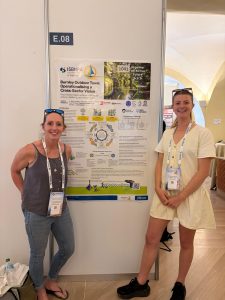
One of the benefits of ISBNPA is that, despite the name, the conference brings together perspectives from far beyond physical activity alone. Some of the most thought-provoking sessions I attended came from colleagues working in nutrition, rehabilitation and other areas of public health.
Hearing how researchers in different disciplines are approaching implementation, complexity and systems change provided a valuable reminder that many of our challenges are shared. Some of the most useful ideas I brought home were not necessarily about physical activity itself, but about how other fields are translating systems thinking or methods into practice, supporting action in real-world settings and building capacity for change.
The value of connections
Away from the conference centre, Cádiz provided the perfect backdrop for reflection. Between sessions there were opportunities to enjoy the beach, swim in the sea and soak up the city’s vibrant atmosphere. Evenings were spent sharing tapas (specifically croquettes) with colleagues on bustling streets lined with locals and visitors alike. One memorable dinner took place at one of Cádiz’s oldest tapas bars, conveniently located next door to our hotel and serving vermouth on tap… whether by chance or careful planning remains unclear!
Beyond the presentations and formal programme, the greatest value came from conversations. I was fortunate to spend time with colleagues from across the UK, South America, Africa, Europe, Australia, New Zealand and Japan, reconnecting with familiar faces and meeting new collaborators. It was particularly valuable to spend time with Dr Ben Rigby discussing ideas emerging from the conference, and it also reminded me how fortunate I am to be supported by both Ben and Professor Diane Crone through my current Early Career Research and Innovation Fellowship (ECRIF).
The fellowship is exploring how systems approaches are interpreted and operationalised within physical activity policy across different international contexts, making ISBNPA the perfect environment to test ideas, build connections and learn from others working in this space. Many of the conversations I had throughout the week directly informed my thinking and reinforced the value of taking an international perspective on this work.
My most unexpected takeaway from the week was how different this conference felt compared with previous years. For the first time, I couldn’t walk across the venue without bumping into collaborators, colleagues or friends. That sense of belonging within an international research community was perhaps the most rewarding part of the week.
I left Cádiz with a notebook full of ideas, a long list of people to follow up with and renewed enthusiasm for the work ahead. The opportunities that have come through NELP, my ECRIF Fellowship and wider international partnerships have opened doors I could only have imagined a few years ago. I am grateful to Dr Katie Shearn, Principal Investigator for NELP and Interim Director of the Advanced Wellbeing Research Centre, whose support and leadership have played an integral role in creating those opportunities.
And after five consecutive days of eating them, I’m pleased to report that I still haven’t reached my croquette limit.