
AWRC research conducted on the pioneering Fram2 spaceflight
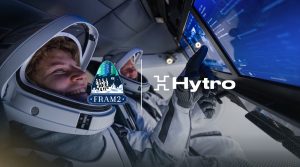
Blood flow restriction (BFR) technology developed by Sheffield Hallam University and Advanced Wellbeing Research Centre researchers and our Advanced Wellbeing Accelerator alumni Hytro will play a key role in pioneering research on Fram2, the first human spaceflight over the Earth’s polar regions.
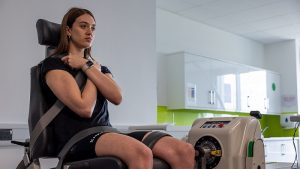
 BFR uses compression to temporarily reduce blood flow to the muscles in the arms and thighs, increasing muscle stress and enhancing the effectiveness of exercise. In microgravity, where everyday movement lacks resistance, astronauts face significant challenges in maintaining muscle mass and bone density.
Originally developed to enhance athletic performance, BFR technology is now a promising tool for astronaut health – and crucially also holds potential for improving muscle mass and function in everyday life, supporting overall population health.
Fram2 is the first human spaceflight mission to a polar orbit, traveling over Earth’s North and South Poles. From an altitude of 425–450 km, the international crew of four will spend three to five days on-orbit, conducting research that advances human health.
As part of our work with Fram2 and Hytro, the AWRC will lead on reviewing research and presenting findings of how BFR with exercise can protect astronaut health in zero gravity.
Dr Dr Tom Maden-Wilkinson said “As co-principal investigator for the project alongside Dr Joe Handsaker it is a real privilege to be able to be able to work as part of such a pioneering programme of research building on the success of our work on Polaris Dawn. Our ability to maintain our muscle mass and function is crucial not only for spaceflight but for our everyday lives. In bringing together experts from different fields of industry and academia, we hope that this work helps bring us ever closer to some of the solutions that will enable the aim of humans going to Mars.”